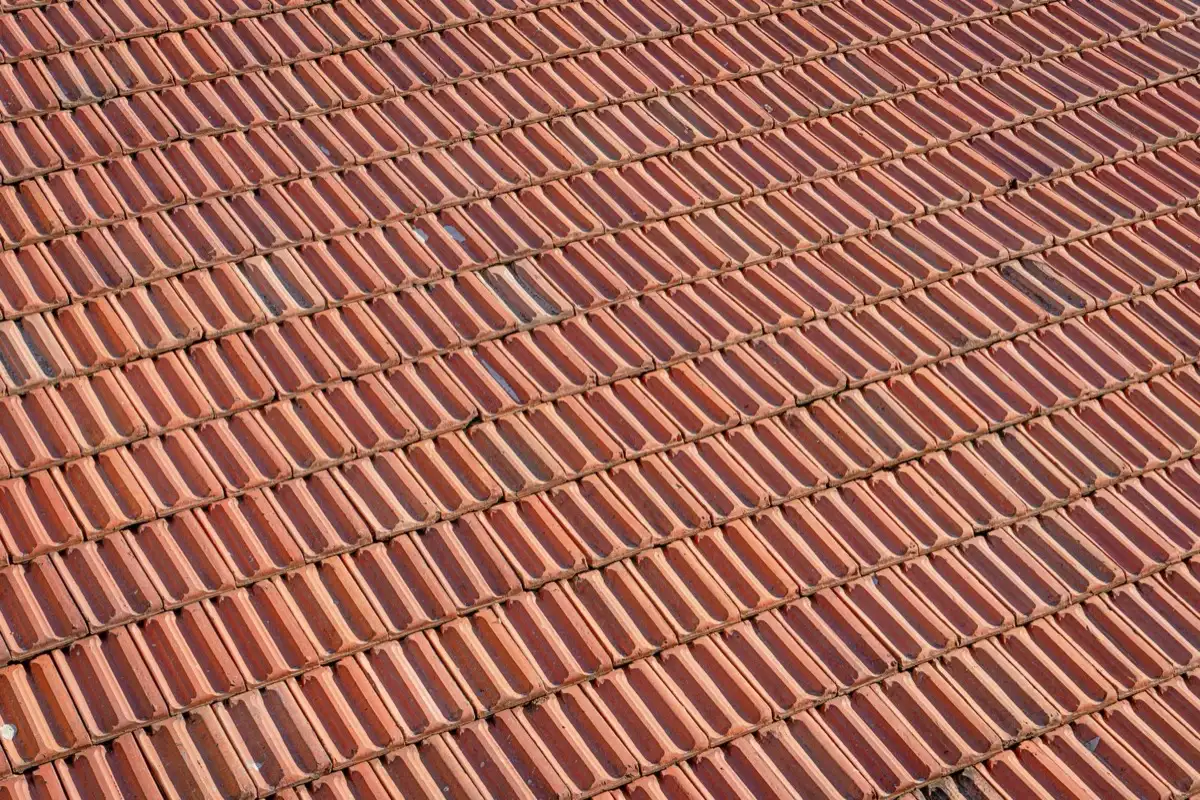
A new roof on the home you live in is not a deduction, and it never has been. What most people are reaching for is a credit — and that credit did cover roofs once, dropped them in 2023, then ended entirely at the close of 2025. What a roof does instead is quieter and often worth more: it raises your basis.
This is information rather than tax advice. Nothing here can tell you what you qualify for; that depends on a return nobody on this side has seen.
Deduction, credit, basis — and only one is usually in play
A deduction reduces the income you are taxed on. A credit reduces the tax itself, dollar for dollar, which is why everyone hopes for one. Basis does neither this year — it changes the arithmetic on a sale a decade away.
IRS Publication 530, Tax Information for Homeowners, is blunt about the first two: what a homeowner cannot deduct includes insurance, utilities, association fees and repairs. A roof replacement is not on that ledger at all. It sits in the third category, which nobody explains at a kitchen table.
What a new roof does instead: it goes into your basis
Basis is what the house cost you for tax purposes. Publication 523, Selling Your Home, lists "New roof" among the exterior improvements that increase it. At sale you subtract adjusted basis from the amount realized, and the difference is your gain. Bigger basis, smaller gain.
Whether that saves anything depends on the exclusion. Publication 523 lets you exclude the first $250,000 of gain on a main home, or $500,000 for a married couple filing jointly, if you meet its ownership and use tests. Plenty of households sell under that line and the roof never enters the calculation.
Two wrinkles the software blogs skip:
- Improvements no longer part of the home come back out. Publication 523 excludes "any costs of any improvements that are no longer part of your home," its own example being carpet you installed and later replaced. The roof you tear off in 2052 leaves by the same logic. The one on the house at closing is the one that counts.
- A repair is not an improvement. Publication 530 draws the line as improvements that "add to the value, prolong the useful life, or adapt the property to new uses," against repairs that keep the home in good condition without adding value. A full replacement is the former. Re-nailing eleven blown-off tabs is not, whatever the invoice calls it.
The energy credit everybody means, and the two dates that ended it
Here is where the internet is wrong, in a specific and datable way.
The Energy Efficient Home Improvement Credit at 26 U.S.C. 25C genuinely used to include roofing. The older statute counted as a building envelope component "any metal roof or asphalt roof installed on a dwelling unit, but only if such roof has appropriate pigmented coatings or cooling granules." The Inflation Reduction Act, Pub. L. 117-169 sec. 13301, struck that subparagraph, applying to property placed in service after 31 December 2022.
The definition that replaced it, at 25C(c)(3), runs to three items: insulation and air sealing material, exterior windows including skylights, exterior doors. No roofs. The IRS page for the credit lists those same three and never mentions roofing.
Then the credit itself ended. Public Law 119-21, enacted 4 July 2025, amended 25C so the section "shall not apply with respect to any property placed in service after December 31, 2025." The IRS states the same limit on its own page, and published Fact Sheet FS-2025-05 on 21 August 2025 covering the accelerated terminations.
Two independent reasons your roof gets nothing, and which applies matters if you are looking at an older return:
| Placed in service | Roof under 25C |
|---|---|
| Through 31 Dec 2022 | Metal or asphalt with qualifying coatings or granules was in the definition |
| 1 Jan 2023 – 31 Dec 2025 | Roofs off the list; credit alive for insulation, windows, skylights, doors |
| After 31 Dec 2025 | Section does not apply to any property |
For that middle band the IRS states the credit equaled 30% of qualifying costs against annual ceilings of $1,200 in general and $2,000 for heat pumps, heat pump water heaters and biomass stoves or boilers. Those figures are the IRS's, and they are now history.
Why does half the roofing internet still promise a credit? Because the IRS's own "Energy Incentives for Individuals: Residential Property" questions and answers really does list "Roofs (metal and asphalt) and roof products" — while covering tax years 2018 through 2021 and carrying a notice that it is historical and no longer updated. A true page about a dead rule is the most copied kind there is.
Solar is the real exception, and narrower than it sounds
The Residential Clean Energy Credit at section 25D answers differently, because a solar shingle is a generator that happens to keep the rain out.
The IRS puts the split in one sentence: "Traditional building components that primarily serve a roofing or structural function generally don't qualify. For example, roof trusses and traditional shingles that support solar panels don't qualify, but solar roofing tiles and solar shingles do because they generate clean energy." The Form 5695 instructions supply the other half — decking and rafters serve only a roofing or structural function and do not qualify, while nothing fails "solely because the property constitutes a structural component."
The practical rule: the solar product counts, the deck beneath it does not, and re-sheathing a slope so it can carry panels is a roofing cost wearing a solar hat.
That credit is finished too. The same July 2025 law, at sec. 70506, made 25D unavailable "with respect to any expenditures made after December 31, 2025," and the IRS FAQ is exact about the word made: an expenditure is treated as made when installation is completed. A deposit in December for a February install does not hold the door open.
A rental roof, and a home office, are depreciated rather than deducted
The second-largest confusion, and it turns on one year against many.
Publication 527, Residential Rental Property, says you must capitalize any expense you pay to improve rental property, and its improvements table lists a new roof. Capitalized means recovered through depreciation: residential rental property runs 27.5 years under the General Depreciation System, with additions and improvements treated as separate property items. So a landlord does not write off a roof this April. They begin writing it off. Publication 527 also points to the routine maintenance and de minimis safe harbors for tangible property, both real, both reasons this conversation ends with a preparer.
A home office scales the same idea down. Publication 587, Business Use of Your Home, treats a permanent improvement — its examples include "adding a new roof" — as an addition to basis that is then depreciated, the business portion running 39 years as nonresidential real property. A roof covers the whole house, so it is an indirect expense taken on the business-use percentage rather than in full. One catch: Publication 587 says that electing the simplified method rules out depreciation for the business portion, and under that election the roof does nothing for you at all.
Casualty loss: federally declared disasters only
Publication 547, Casualties, Disasters, and Thefts, states the limit plainly: for tax years beginning after 2017, an individual's casualty loss on personal-use property is deductible only where the loss is attributable to a federally declared disaster. Wind that peeled your ridge cap on an ordinary Tuesday is not that, however expensive the Tuesday was.
Even inside a declaration, two subtractions come first. Publication 547 reduces each loss by $100, then the total by 10% of adjusted gross income — with a separate $500 floor and no 10% reduction for a qualified disaster loss. Both figures are the publication's, and that arithmetic quietly ends most roof-sized losses.
Insurance money, and what it does to basis
Coverage is a different subject — whether a carrier pays at all and how the file runs afterwards have their own pages. The tax point is narrow.
Publication 547 says you have no casualty loss to the extent you are reimbursed, and that the reimbursement is subtracted when you figure the loss. Publication 523 says you must adjust basis by any insurance reimbursement you receive or expect to receive for casualty losses. So the figure belonging in your basis file is what you genuinely spent — deductible plus anything paid over the settlement — not the total on the invoice.
If you borrowed for it, the interest is its own question
Publication 936, Home Mortgage Interest Deduction, disallows interest on a loan secured by your home to the extent the proceeds were not used to buy, build or substantially improve that home. Its test for substantial is the same shape as the basis test — adds value, prolongs useful life, or adapts the home to new uses — and repainting to maintain the home does not clear it. A full replacement reads as substantial where a patch does not, so the paperwork tying the borrowing to the work belongs next to the invoice.
Publication 936 also sets the debt ceilings at $750,000, or $375,000 married filing separately, for debt secured after 15 December 2017. Whether any of it reaches your return turns on whether you itemize, which most households no longer do.
Bottom line
No deduction, no credit, one basis entry, and a short list of narrow situations — rental, home office, declared disaster, borrowing — where a different rule applies.
Publication 530 tells homeowners to keep improvement records as long as the period of limitations runs for the year the home is sold, which can be decades after the crew has gone. The file is a contract, a paid invoice, proof of payment and dated photographs, and it costs nothing to assemble on the day. Rebuilding it at a closing table costs plenty. Anyone telling you a new roof pays for itself at tax time is reading a page that expired.
Allen Premium Roofing replaces roofs across Allen and the US 75 corridor and documents the job the way a basis file needs it: an itemized contract, dated photographs before and after, a paid invoice saying what was installed. Call (888) 891-8069 and ask for the documentation copy with your estimate.
Ready for a free quote in Allen?
Allen Premium Roofing — free estimate, clear scope, no pressure. Use the form on this page or jump to the homepage quote.
Related services in Allen
Allen Premium Roofing money pages — go straight to the service you need.
- Roof Replacement →
Most Allen houses are on their second roof rather than their first, and that changes the question in front of you. Before quoting a replacement we work out when the roof up there went on and who put it there, because the answer frequently argues against replacing it at all.
- Storm Damage Restoration →
Restoration in Allen is as much a scheduling problem as a roofing one. A single cell can drop several hundred claims into one subdivision, and the crews knocking doors that afternoon are usually the ones that arrived from out of state the day before.
- Roof Inspections →
An inspection here has one job ahead of all the others: establish how old the roof actually is. The age of the house tells you almost nothing in Allen, because the great majority of these roofs have already been replaced once.
- Roof Leak Repair →
Leaks on a wave reroof are boringly predictable. The shingle field is usually the newest thing on the house and the least likely culprit.
- Hail Damage Roofing →
This page will talk some of you out of a claim. Allen sits in a genuine hail market, and it is also full of ten to fifteen year old reroofs whose defects look a great deal like hail to anybody who wants them to.
Frequently asked questions
Can you claim a new roof on your taxes?
Not on the home you live in. IRS Publication 530 lists what a homeowner cannot deduct, and a roof replacement is a capital improvement rather than a deductible cost. What it does is add to your basis: Publication 523 names a new roof among the exterior improvements that increase basis, which reduces your gain whenever you sell.
The exceptions run the other way — rental property, a home office, and a loss from a federally declared disaster each have their own rule, and none of them is a same-year write-off for an ordinary homeowner.
Does a new roof qualify for a federal energy tax credit?
No, and there are two separate reasons. Metal and asphalt roofs with qualifying pigmented coatings or cooling granules were in the definition of a building envelope component at 26 U.S.C. 25C until the Inflation Reduction Act (Pub. L. 117-169, sec. 13301) struck that subparagraph for property placed in service after 31 December 2022.
The current definition is insulation and air sealing, exterior windows and skylights, and exterior doors. Then Public Law 119-21, enacted 4 July 2025, ended the credit outright for any property placed in service after 31 December 2025.
Do solar shingles or solar roofing tiles count?
Under a different credit, and only for the solar part.
The IRS states it directly for the Residential Clean Energy Credit at section 25D: traditional building components that primarily serve a roofing or structural function generally do not qualify, and roof trusses and traditional shingles that support solar panels do not, but solar roofing tiles and solar shingles do because they generate clean energy.
The Form 5695 instructions add that decking and rafters serve only a roofing function. That credit also has an end date — Public Law 119-21 sec. 70506 made it unavailable for expenditures made after 31 December 2025, and the IRS treats an expenditure as made when installation is completed.
Can I deduct a new roof on a rental property?
Not in one year. Publication 527 says you must capitalize any expense you pay to improve rental property and lists a new roof as an improvement. Capitalized cost is recovered through depreciation, and residential rental property runs 27.5 years under the General Depreciation System, with additions and improvements treated as separate property items.
Publication 527 also describes a routine maintenance safe harbor and a de minimis safe harbor for tangible property, which is precisely the kind of question a preparer should answer against your actual numbers.
My roof was destroyed in a storm. Is that a casualty loss?
Only if a federally declared disaster caused it. Publication 547 states that for tax years beginning after 2017, an individual's casualty loss on personal-use property is deductible only when the loss is attributable to a federally declared disaster.
Inside a declaration, the publication still requires each loss to be reduced by $100 and the total reduced by 10% of adjusted gross income, with a separate $500 floor and no 10% reduction for a qualified disaster loss. You also have no loss to the extent you are reimbursed.
Do I need to keep the paperwork if I am not selling for years?
That is exactly when you need it. Publication 530 tells homeowners to keep improvement records for as long as the period of limitations runs for the year the home is sold, which can be decades after the work.
Publication 523 adds the detail that catches people out: costs of improvements no longer part of the home do not count, so the roof on the house at closing is the one in your basis, not the three before it. Contract, paid invoice, payment record, dated photographs.
Local context
How this applies in Allen, TX
Every article here is written from roofing work done in Allen and the US 75 corridor, so the numbers reflect local labour, permit and material costs rather than a national average. Your own job can land either side of them depending on access, the condition of what is already there, and the materials you pick — architectural laminate shingles fastened six per shingle inside the nailing zone, UL 2218 Class 4 impact-rated laminates, synthetic underlayment fastened with plastic cap nails.
The way to turn any of this into a real answer is to have someone look at your actual situation. The free estimate is free, itemized and written down, with no deposit and no obligation. Call (888) 891-8069 or start on the Allen Premium Roofing homepage.
Areas Allen Premium Roofing covers
Allen first, then the surrounding communities of the US 75 corridor. Each has its own page with local detail rather than a copy of this one:
- Plano, TX — Collin County, population 285,494
- Frisco, TX — Collin and Denton Counties, population 200,509
- McKinney, TX — Collin County, population 195,308
- Richardson, TX — Dallas and Collin Counties, population 119,469
- Rowlett, TX — Dallas and Rockwall Counties, population 62,535
- Little Elm, TX — Denton County, population 46,453
Or jump to the full list of Allen services.
More from the Allen Premium Roofing blog
- Attic Ventilation Calculator for a Allen, TX Roof
Work out your own attic ventilation number in Allen, TX: floor area, the 1/150 or 1/300 divisor, square inches of net free area, and how many vents.
- 3-Tab Shingles Versus Architectural in Allen, TX: One Layer or Two
A 3-tab shingle is one layer with cutouts. An architectural shingle is two layers bonded together.
- Roof Replacement Cost in Allen, TX: What Drives the Number
Roof replacement is priced per square, not per house. Here's what actually moves the bid in Allen, TX, and which line items are worth paying for.
The Allen Premium Roofing Team
roofing specialists serving Allen, TX
Written by the Allen Premium Roofing team — insured roofing pros serving Allen, TX and the surrounding area.